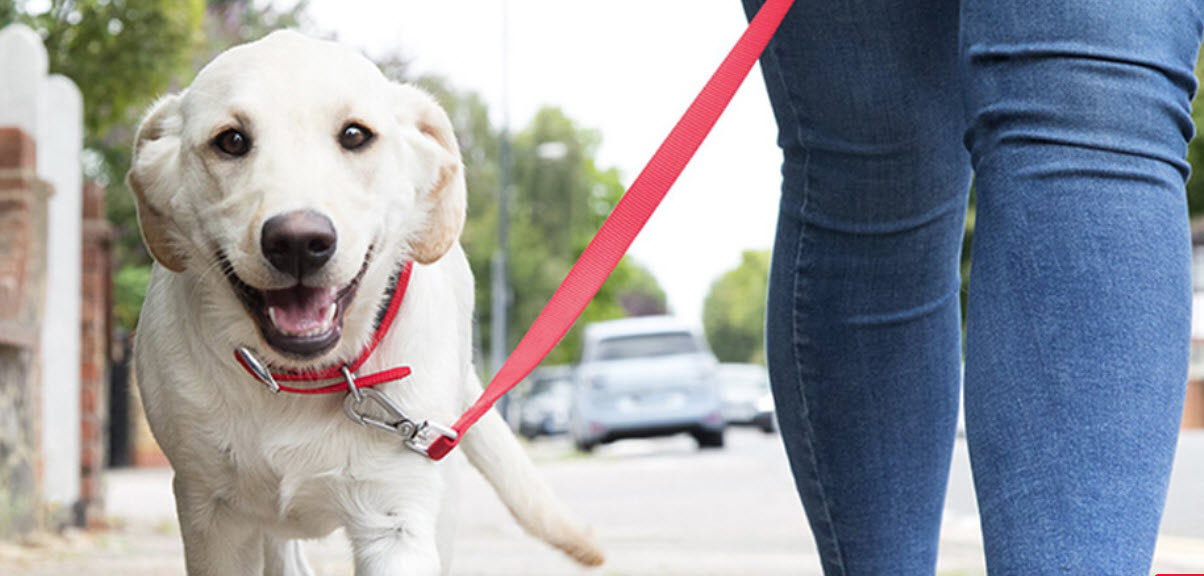
Do you think you might have a leash-reactive dog?
It’s important to understand that reactivity doesn’t necessarily translate to aggression. At its core, reactivity means a “responsiveness to stimulus.”
In your dog’s case, that stimulus might be a person, a dog, a car, a bike – you name it.
Your dog’s “responsiveness” is less than ideal for those of us on the other end of the leash.
You likely have a leash-reactive dog if:
- Your dog whines or barks at people, dogs, cars, etc. on leash.
- Your dog lunges or excessively strains at the leash when seeing a stimulus.
- Your dog redirects onto the leash or onto you by biting, nipping, or shaking.
- Your dog engages in similar behaviors behind a window, fence, or gate.
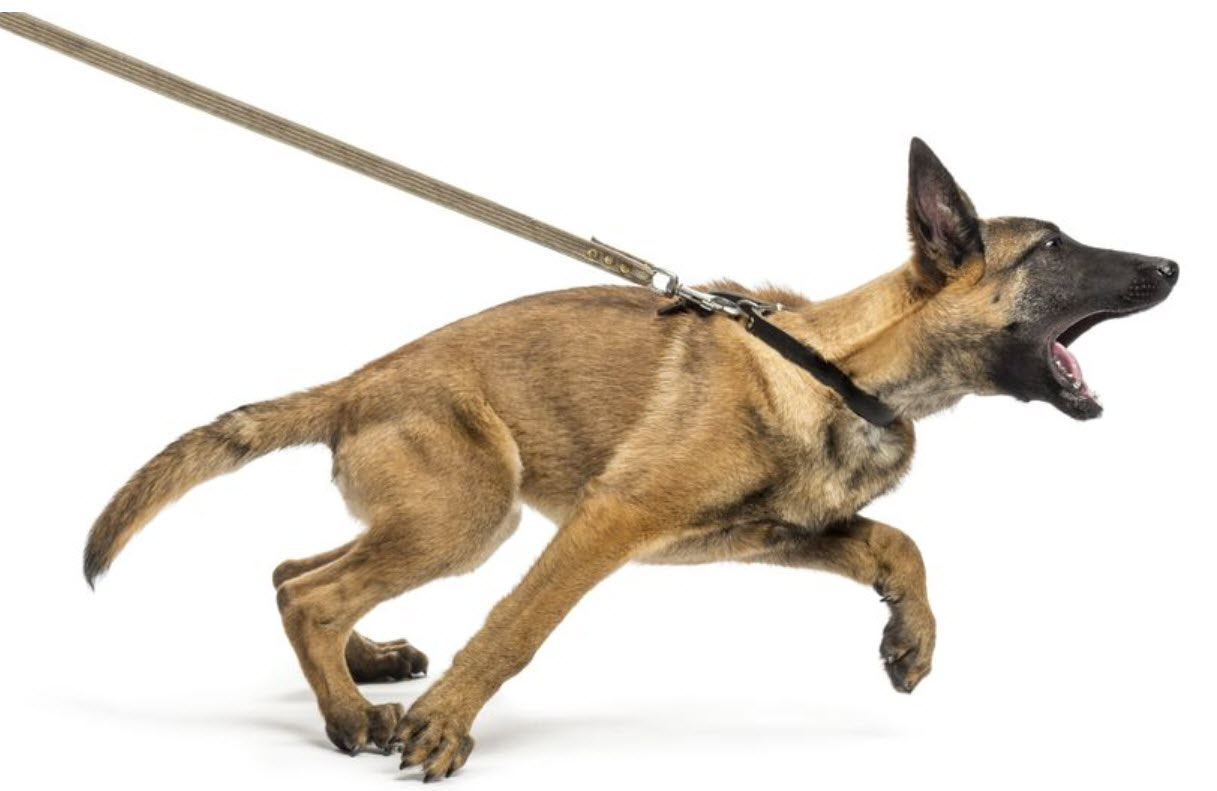
Our Leash Reactive Group Training Class is designed to help you understand why your dog is reactive and how to manage your dog’s reactivity.
We will cover the commands below. These commands will help you manage and redirect your dog when they see a stimulus that triggers them and also teach you the best way to walk your dog.
- Watch Me
- Shush
- Sit
- Stay
- Come
- Loose Leash Walking
- Heel
At the end of this 4-week class, you will have learned how to identify your dog’s triggers, how to get their attention and focus when in a reactive state, and how to redirect your dog. You will have all the tools needed to make your walks a more enjoyable activity for you and your dog.